
Reading Auto-Renew Signals in BestOnlyFans Ranking Data
OnlyFans subscriptions rely on auto-renew to keep access continuous, but that renewal can stop without warning when a creator changes their price. Reading ranking data carefully helps you see those change signals before they hit your billing cycle. This article explains how the platform’s renewal rules work, how ranking cards show pricing history, and how to time your subscriptions so an unexpected price adjustment does not cut off access you were counting on.
The mechanic itself is simple, but the timing catches people off guard. A creator can adjust their subscription price at any point, and the platform does not ask subscribers to confirm the change in advance. What happens next depends entirely on whether the new price is higher or lower than what you originally agreed to pay.
How Price Changes Trigger Auto-Renewal Stops
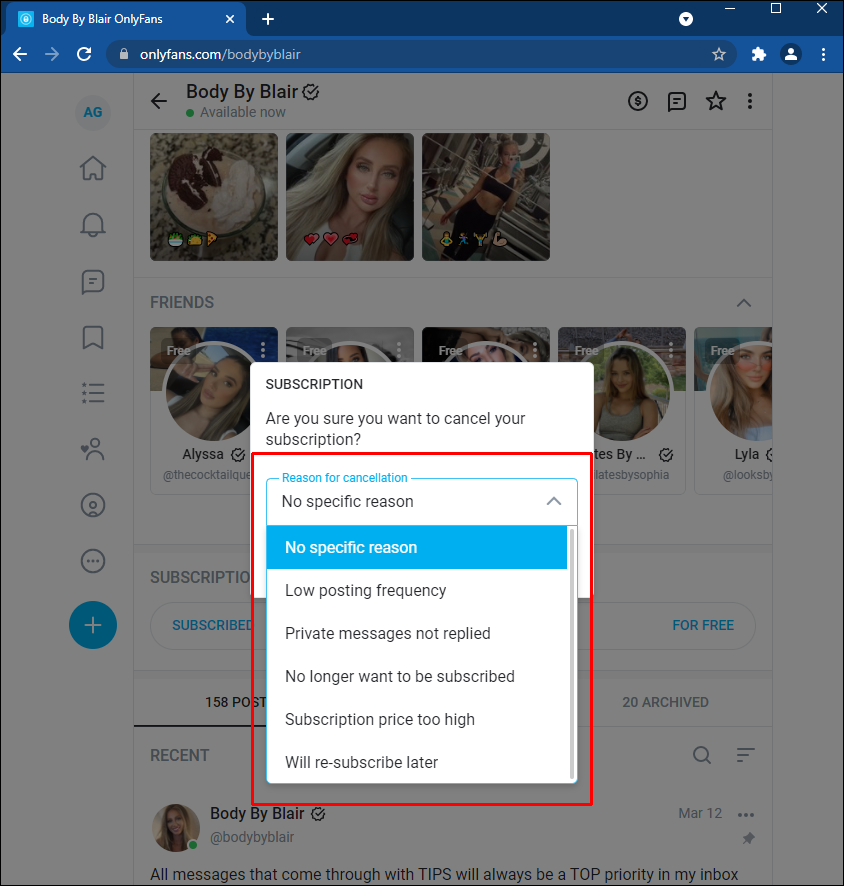
When a creator raises their base subscription price, auto-renew switches off automatically. Your current access stays active until the paid period you already bought runs out. After that date, nothing renews unless you manually resubscribe at the new, higher rate.
A price decrease behaves differently. The subscription continues renewing, but at the lower amount, and the new rate applies from your next billing date. No action is needed from you in that case, which is why decreases are easy to miss entirely.
| Scenario | Subscriber Action Required | Access Continuation | Price Paid |
|---|---|---|---|
| No price change | None | Continues without interruption | Same rate as before |
| Price decrease | None | Continues without interruption | New lower rate from next cycle |
| Price increase | Manual resubscribe at new rate | Ends when the paid period expires | Higher rate, or access lapses |
Paid subscriptions run from a $4.99 minimum to a $49.99 maximum on the base rate, and most pages sit in the $4.99 to $15 band, clustering around $5 to $10. Free pages work on a different model, setting the base price to $0 and earning through pay-per-view messages and tips instead.
Promotional first months are the one exception to the minimum. A first month can run below $4.99, for example $3, without breaking any rule, because the base price itself stays at or above the floor. That distinction matters when you are reading a card and trying to work out whether a low number is a base rate or a temporary entry offer.
What BestOnlyFans Ranking Cards Display About Pricing
Ranking cards exist because OnlyFans has no built-in discovery feed or directory. External sites fill that gap by compiling creator pages into a browsable format, and the more useful ones treat price as a data series rather than a single number.
A well-built card shows several distinct elements, and each one answers a different question about renewal risk.
- Current listed base price, so you know the rate in effect right now.
- Historical price minimum and maximum, which reveals how far the rate has moved over time.
- First-month promotional rate, if one is active, with the entry price clearly separated from the base.
- Date of the last detected price change, which tells you how fresh the data is.
- Volatility indicator, either stated directly or implied by the shape of the price graph.
BestOnlyFans builds its cards around pricing history as a first-class field, which is the methodology this article draws on for the patterns described below. That approach makes the cards useful for more than comparison shopping, because a price line over time tells you something a single figure cannot.
Spotting Volatility Patterns Before They Affect You
Once you know what a price history line represents, the shape of that line becomes readable. Five recurring patterns cover most of what you will encounter on a ranking card.
- Flat stable line: the base rate has not moved, so renewal risk is low.
- Regular promotional dips: predictable cycling, often tied to a recurring first-month offer.
- Single sharp spike: possibly a permanent increase, but worth watching before assuming.
- Gradual stair-step increases: the creator appears to be testing how much the audience will absorb.
- Sawtooth fluctuation: repeated up-and-down movement, which carries the highest renewal interruption risk.
The stair-step pattern deserves particular attention. A creator who raises the price in small increments over months is not making a one-off correction; they are measuring response. Subscribers on that kind of page should expect the auto-renew stop to trigger again after a later increase.
Tip: before resubscribing after a price increase, check whether the card’s history shows a stair-step pattern. A single increase may hold, but a series of them usually means the rate is still moving, and your renewal will stop again when the next one lands.
Timing Your Subscription Around Stable Creators
Stability is not about how much a subscription costs; it is about how often the number changes. A page at $12 with a flat line for a year is a lower renewal risk than a page at $6 that has moved four times in six months.
Match the visual pattern to a strategy rather than guessing from the current price alone.
| Stability Signal | Ranking Visual Pattern | Subscriber Strategy | Renewal Risk Level |
|---|---|---|---|
| Flat line | Long horizontal price history | Subscribe anytime, let it renew | Low |
| Periodic dips | Repeating regular low points | Time entry to a promo, note the end date | Low to moderate |
| Sudden spike | Single sharp upward step | Wait about 30 days to confirm permanence | Moderate |
| Erratic movement | Sawtooth or clustered changes | Stay month-to-month, avoid prepaid terms | High |
If you are comparing candidates and want a starting point, looking at who has most fans on onlyfans can point you toward pages with longer track records, and longer records mean more price history to read. Popularity is not the same as stability, but a large sample of dated price points is easier to interpret than a short one.
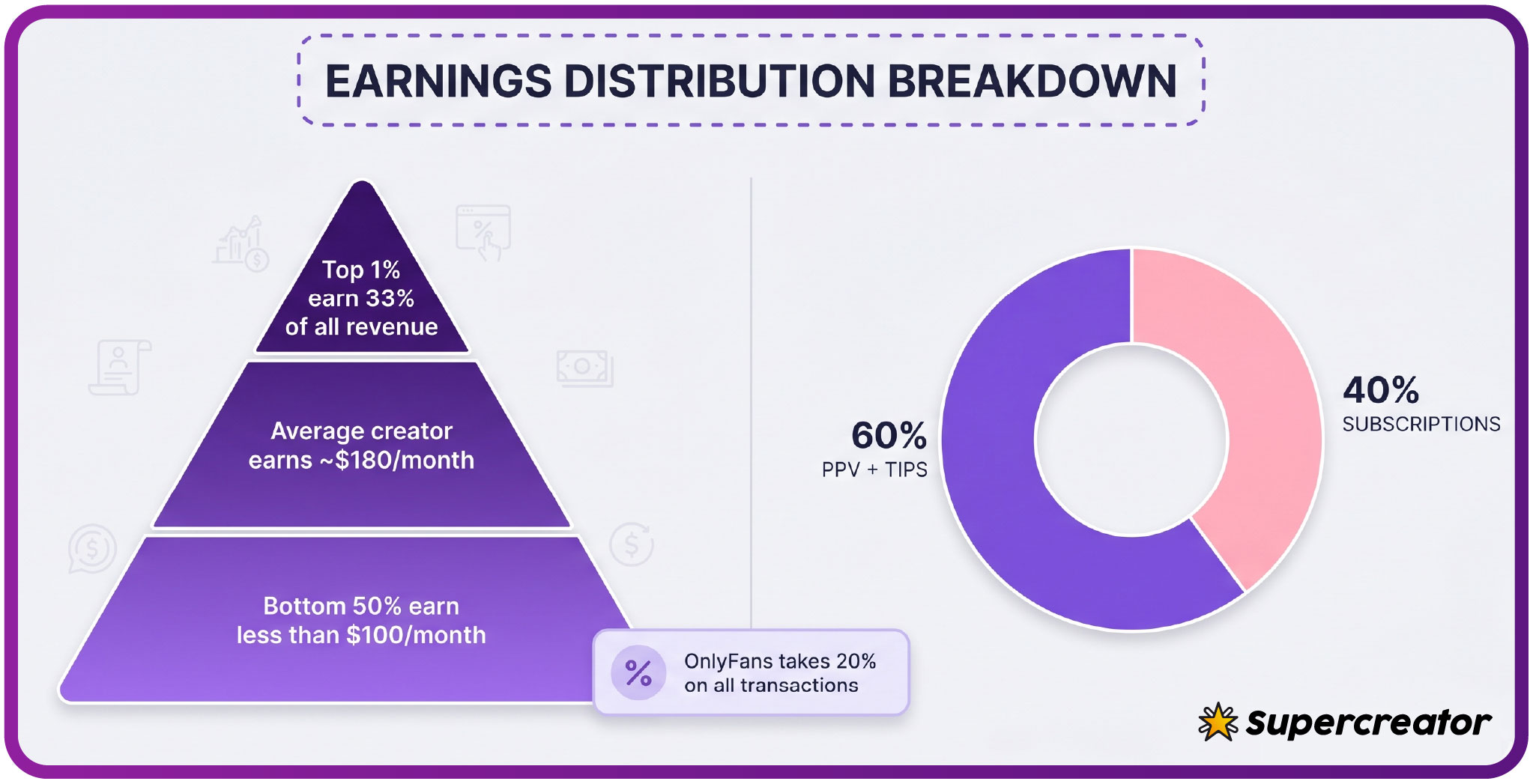
Creator earnings are split with the platform, which keeps 20% of everything and passes 80% to the creator. That split applies to subscriptions, tips, and paid messages alike, and it is one reason creators revisit their pricing as their audience grows.
When Ranking Card Freshness Matters Most
Price history is only useful if it is current. A card scraped weeks ago may show a rate that no longer exists, especially for a creator who adjusts pricing often or runs short promotions.
Three warning signs tell you a card may be stale.
- The price shown differs from the amount on the OnlyFans checkout page.
- The card shows no update in 30 or more days for a creator who is clearly still active.
- The promotional rate is listed without an expiration date, and the historical graph ends abruptly without a recent data point.
Freshness matters most in the days right before a renewal. If your billing date is close and the card’s last update is older than your last payment, treat the displayed rate as a hint rather than a fact and confirm it at checkout.
Building a Renewal Calendar from External Rankings
A simple calendar removes most of the guesswork. The goal is to know, a week ahead of each billing date, whether the rate you are paying is still the rate on the page.
- Export your personal renewal dates from your OnlyFans subscription list into a calendar.
- Match each creator name to its ranking card and note the current listed base price.
- Flag any creator whose card shows a price change within the last 90 days.
- Set an alert seven days before each renewal to compare the current rate against the historical pattern.
When an alert fires for a flagged creator, spend two minutes on the card. If the line is flat, leave the renewal alone. If the line has stepped up recently, expect the auto-renew switch to be off and decide whether the new rate is still worth it.
Keep an eye on account security while you are consolidating this information. Enabling two-factor authentication on your OnlyFans login and on the email address tied to your payment method protects the whole routine, since a compromised account can change what you see at checkout.

Limitations of Ranking Data for Auto-Renew Prediction
External rankings are a useful signal, not a complete record. Several categories of pricing simply never reach a scraper, so treat every pattern as evidence rather than proof.
The blind spots are consistent across ranking sites.
- Private discount links a creator shares directly are not scraped, so a lower rate may exist off-card.
- Bundle pricing for three-month or six-month terms does not appear on a monthly price line.
- Temporary sale prices can reset before the next scrape cycle, leaving no trace in the history.
- Geographic pricing variations are usually unflagged, so two readers may see different numbers on the same page.
- A creator who deletes and recreates a page under the same name breaks the continuity of the history line.
None of this makes the data useless. It means the card tells you what is likely, and the checkout page tells you what is true. When the two disagree, the checkout page wins every time.
Keep the card as an early warning system and the platform as the source of record. Used that way, ranking data turns an unpredictable renewal stop into something you saw coming and planned around.
FAQ
Does BestOnlyFans update prices in real time or on a schedule?
Most ranking sites refresh on a crawl schedule rather than continuously, so a card can lag behind a change made minutes ago. Treat the listed rate as current only if the card’s update date is recent, and verify at checkout before your billing date.
If a creator lowers their price, will my auto-renew drop automatically?
Yes. A decrease does not interrupt the subscription, and the lower rate applies from your next billing cycle without any action from you. You do not need to cancel and resubscribe to capture the reduction.
How can I tell if a price spike on a card was temporary or permanent?
Wait roughly 30 days and check whether the history line stays at the higher level or returns to the previous rate. A spike that holds through the next update is likely permanent; one that reverts was probably a short test or an error in the scrape.
What should I do if a card shows a different price than OnlyFans checkout?
Trust the checkout page, because that is the amount you would actually be charged. Then note the discrepancy, since it usually means the card is stale and its volatility readings for that creator should be treated with caution until the next update.